
Commercial Gym Equipment Guide: Plan the Facility Before You Buy
Institutional procurement guide
A commercial gym equipment guide should begin with the people, programs, space, and operating constraints of the site—not a catalog page. For an athletic department, community center, school, or club, the useful question is not “Which machine looks impressive?” It is “Which equipment schedule supports the way this site will actually be used, maintained, supervised, and documented?”
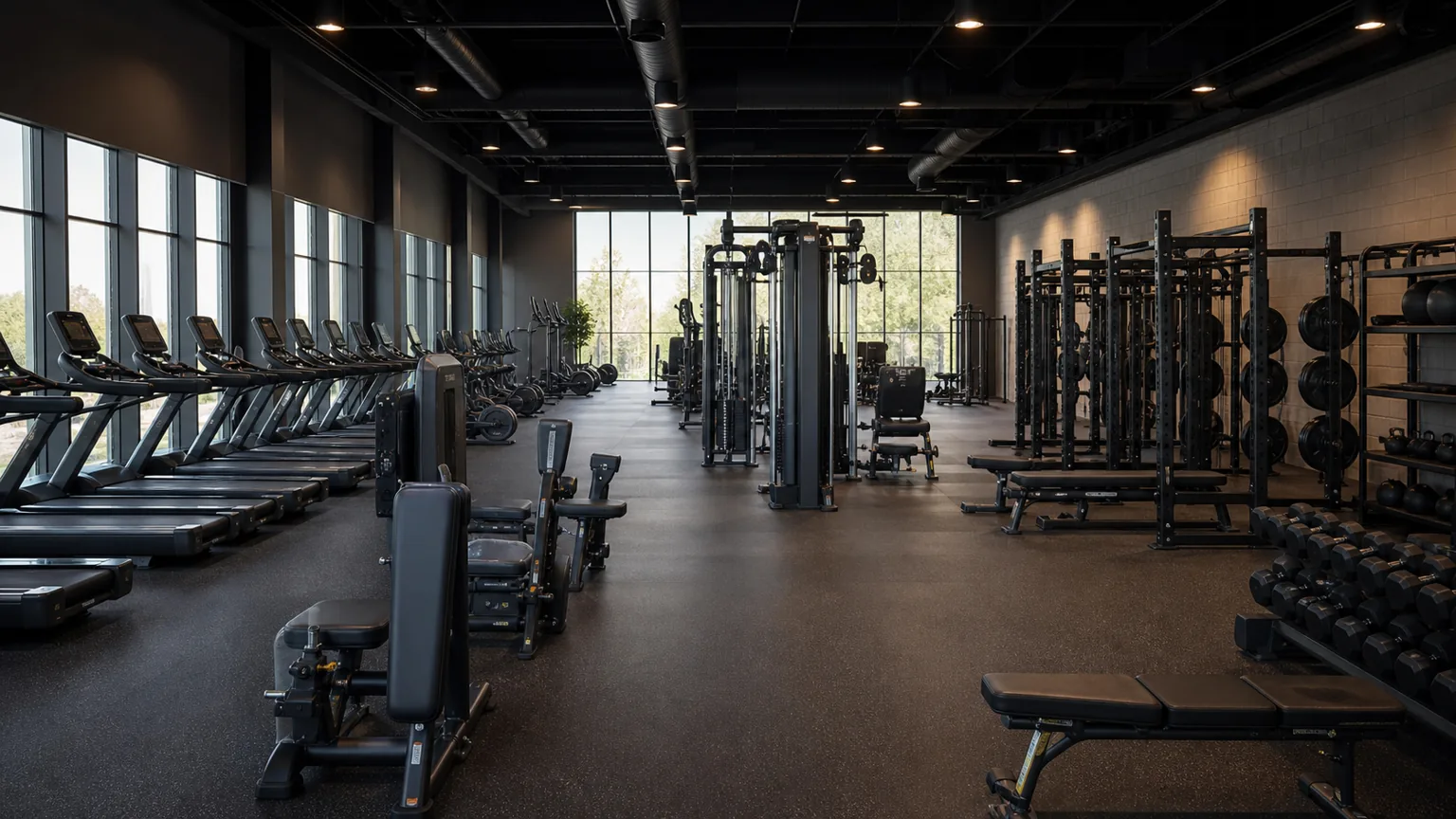
1. Scope the facility before selecting commercial gym equipment
The first job is to translate a broad fitness project into a written operating brief. Who will use the gym? How many members or teams may train at the same time? Which sessions are scheduled, coached, open-access, or rehabilitative? Those answers determine the mix of machines, free weights, cable stations, racks, and cardio equipment far better than a generic starter list.
For example, an institutional site may need to separate supervised strength training from general fitness access. A school weight room may have different traffic patterns from a parks-and-recreation gym. A club may prioritize cardio availability during peak hours. None of those choices is automatically right; they are design inputs that should be documented before a quote is compared.
Start with four short statements: the intended users, the programming model, the peak occupancy, and the usable space. Add constraints that can change the purchase: ceiling height, floor loading, electrical availability, delivery access, storage, cleaning routines, staff sightlines, and the ability to service equipment after installation. This creates a procurement record that survives personnel changes and budget reviews.
2. Build the equipment schedule by training zone
A commercial gym is easier to plan as connected zones rather than a collection of individual purchases. Each zone should have a purpose, a projected user load, a supervision method, and a maintenance expectation. The schedule can then show where duplication is useful and where it merely consumes space.
Strength and free-weight zone
Strength training may include racks, benches, adjustable components, plates, dumbbells, barbells, storage, and selectorized machines. The key decision is the training format: coached groups, independent members, team sessions, or a mix. Equipment should support the exercises the program actually uses, while leaving room for setup, spotters, storage, and safe movement around loaded weight.
Across commercial gyms, a practical selection gives coaches and trainers a range of options for a strength workout without forcing every exercise into one line of equipment. Specify the work each station is designed for, the lower-body and upper-body movements it must accommodate, and the quality of the adjustment and storage details. That makes the package easier to review as it is built and easier to maintain over the years.
Cardio zone
Cardio machines such as treadmills, bikes, ellipticals, and other endurance equipment introduce different questions: power, ventilation, noise, cleaning, queueing, and service access. Count peak demand rather than buying to fill a visual row. A cardio zone that blocks circulation or cannot be maintained easily will create an operational problem even when every machine works on day one.
Functional training and cable zone
Functional training often needs open floor area as much as it needs equipment. Cable stations, movable accessories, resistance tools, and floor-based workouts can support many programs, but only if the zone has clear boundaries and storage. Put the storage decision in the schedule. Loose accessories are not a minor detail when multiple groups share a facility.
| Decision | Question to document | What to verify before purchase |
|---|---|---|
| Capacity | How many users train concurrently in each zone? | Program schedule, peak demand, supervision plan |
| Space | What clear movement and service areas are required? | Measured layout, access routes, ceiling and floor constraints |
| Equipment mix | Which training methods are essential? | Program needs, storage, accessories, machine footprint |
| Requirements | Which standards or rules apply to this project? | Applicable authority and manufacturer documentation |
| Ownership | Who handles maintenance and support? | Warranty terms, parts process, service responsibility |
3. Plan layout and operations as procurement decisions
Layout is not decoration. It determines how members move between equipment, how staff supervise training, and how maintenance teams reach machines. It also determines how a room feels at peak load. Mark doors, columns, windows, power locations, storage, emergency routes, and delivery paths on the plan before finalizing equipment quantities.
Accessibility is part of this review. The U.S. Access Board’s ADA resources provide the starting point for understanding accessibility requirements, but a project team should confirm the rules that apply to its own site. Product placement, routes, controls, and clear floor space should be evaluated against the governing requirements rather than copied from an unrelated gym layout.
Installation also needs an owner. Clarify who receives the shipment, confirms site readiness, coordinates assembly, removes packaging, and records serial or asset information. If the project uses a purchase order or board approval, attach the schedule, layout assumptions, and documentation request to the approval package. That reduces the chance that the final order changes without the team noticing.
4. Compare total ownership requirements, not only features
Commercial fitness equipment is an operating commitment. A quote should be reviewed alongside warranty coverage, parts availability, maintenance instructions, cleaning requirements, service contacts, and the expected process when a machine is unavailable. These details affect member experience, staff workload, and the operating budget after the opening project is complete.
Ask vendors to separate what is confirmed from what still needs review. That includes model specifications, installation scope, freight assumptions, lead-time status, and any requirement-specific documentation. Performance records, where a manufacturer supplies them, should be read in context of the stated use; ask whether they apply to the proposed configuration. An honest answer that identifies an open item is more useful than an optimistic promise that cannot be supported.
For athletic and institutional purchases, documentation matters because the buyer may need to explain the selection to facilities staff, a board, a coach, or an inspector. Pro Heavy Fitness states that it reviews buyer compliance requirements before quoting relevant equipment. Use that review to identify the governing requirement and the supporting documentation; it is not a substitute for confirming the project-specific rule set.
5. Use a documented buying checklist
A phased approach can protect the project when the budget, construction timetable, or available space does not support a full build at once. Fund the core training functions first, reserve utility routes and layout space for later equipment, and record what triggers the next phase. This prevents the first purchase from making a future expansion unnecessarily difficult.
- The intended users, peak capacity, and training program are written down.
- The layout includes circulation, storage, service access, and applicable accessibility review.
- Strength, cardio, functional, and free-weight equipment each have a defined purpose.
- Electrical, delivery, installation, and packaging responsibilities are assigned.
- Applicable NCAA, NFHS, ASTM, ADA, building, or local requirements have been identified where relevant.
- Manufacturer documentation, warranty, maintenance, and service responsibilities are available for review.
- Any price, lead-time, specification, or compliance question that remains open is marked for verification before purchase.
If you are preparing an institutional equipment request, Pro Heavy Fitness can be used as a starting point for a requirement-led discussion before a quote is finalized. The useful input is a site brief—not just a product wish list. For a plain-language overview of the broader subject, see Wikipedia’s physical fitness overview.
Frequently asked questions
What is the first step in a commercial gym equipment project?
Define who will use the site, what training it must support, its peak occupancy, and the measured space available. Those inputs guide the equipment schedule, layout, and budget review.
How do I choose between strength, cardio, and functional equipment?
Choose against the program and peak user demand. Strength, cardio, functional training, and free-weight areas solve different needs; the right balance depends on the site’s users, staff, and available space.
Do commercial gym equipment purchases need compliance documentation?
They may. Requirements vary by product, site, jurisdiction, and governing organization. Identify the applicable requirements and request supporting manufacturer documentation before ordering.
Should an institution buy all equipment at once?
Not necessarily. A phased plan can be appropriate when budget or construction timing is limited, provided the initial layout preserves the space, utilities, and operating plan needed for later phases.


